
The Role of Link-in-Bio Services in Influencer Marketing: A Case Study of “Kemi”
1 Ewha Womans University
2 Sungkonghoe University
DOI: https://doi.org/10.17287/kbr.2026.30.2.149
Abstract
The widespread use of smart devices and advances in network technology have significantly transformed social networking services (SNS). Today, SNS platforms serve as the pivotal channels for communication, marketing, and commerce. Major platforms, including YouTube, Instagram, and Tik Tok, have introduced integrated shopping features, fostering comprehensive e-commerce ecosystems. Despite these improvements, SNS platforms still face notable challenges, particularly in capturing detailed consumer behavior data and managing complicated product registration processes. To overcome these limitations, multilink (“link-in-bio”) services have emerged as valuable tools, especially for influencers engaged in social media-driven commerce. This study investigates how the use of a specific link-in-bio service, “Kemi,” provided by Wired Company, influences sales, particularly in group-buying scenarios. Analyzing daily data from June 2023 to April 2024, we employed linear regression analysis to explore how different user behaviors―card clicks, views of product detail pages, and video content plays―affect daily sales. Our findings show that user activities such as clicking cards and viewing product details positively influence sales performance. These behaviors clearly indicate effective user engagement and enhanced purchase decisions. However, frequent viewing of video content had a negative effect on sales, likely due to users experiencing information overload and fatigue from repeated content exposure. Therefore, the results highlight the necessity of strategically managing content in link-in-bio services. Optimizing content delivery to avoid redundancy is essential for improving user experiences and maximizing commercial outcomes.
Ⅰ. Introduction
The proliferation of smart devices and the advancement of network technologies have significantly enhanced the role of social networking services (SNS) in everyday communication and information sharing (Choi & Lee, 2013). As accessibility and convenience improved, SNS platforms evolved from personal networking tools into essential channels for brand communication and marketing (Kim et al., 2018). Consequently, SNS platforms now serve as integrated commerce environments, facilitating product information dissemination, promotional campaigns, and direct consumer transactions (Kim & Song, 2018). In response to this shift, global platforms such as YouTube, Instagram, and Tik Tok have introduced shopping features, creating seamless e-commerce ecosystems. For example, YouTube and Instagram allow users to view product information and access purchase pages directly through clickable product tags. Tik Tok expanded this approach in 2018 by launching Tik Tok Shop, which includes live-stream shopping, shoppable videos linked to product pages, detailed listings with ratings and reviews, and dedicated shopping tabs for various sellers and brands. These additions enable influencers and merchants to sell products directly within the platform without relying on external e-commerce sites (Kim & Yoon, 2024).
Despite these advancements, global SNS shopping functions continue to face several structural limitations. First, the lack of integration between SNS platforms and external e-commerce systems restricts access to detailed consumer behavior data, including click patterns, session durations, add-to-cart events, and cart abandonment points. This limitation makes it difficult for businesses to develop data-driven marketing strategies or manage customers effectively. Second, procedural and policy-related restrictions often complicate the process of product registration and sales on SNS platforms. For instance, Instagram requires sellers to connect their accounts to Facebook and create a separate business profile, while only products that comply with platform-specific guidelines can be listed. To address these challenges, influencers and brands increasingly place external shopping links within their profile bios (see Figure 1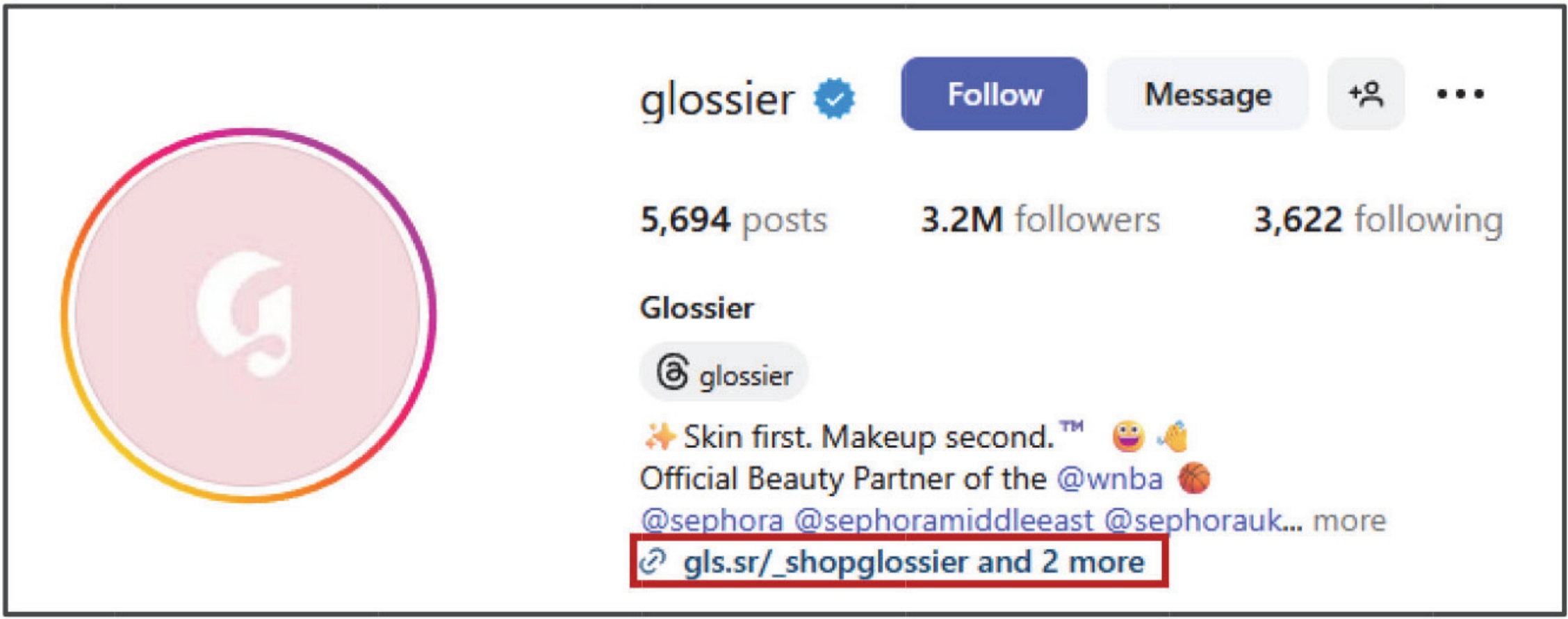
Historically, SNS platforms restricted users to a single external link in their profile biographies. However, this policy changed in April 2023, when platforms began allowing up to five external links in response to increasing user demand. Meta CEO Mark Zuckerberg explained that enabling multiple external links in profile biographies had been among users’ most frequent requests (Ahn, 2023). This update underscores the evolving role of SNS platforms as essential tools for business and brand promotion. Nevertheless, Instagram still prominently displays only one external link, requiring users to click further to view additional ones. This structure limits the clarity of navigation, as users can only see the titles and addresses of linked sites without additional contextual information (see Figure 2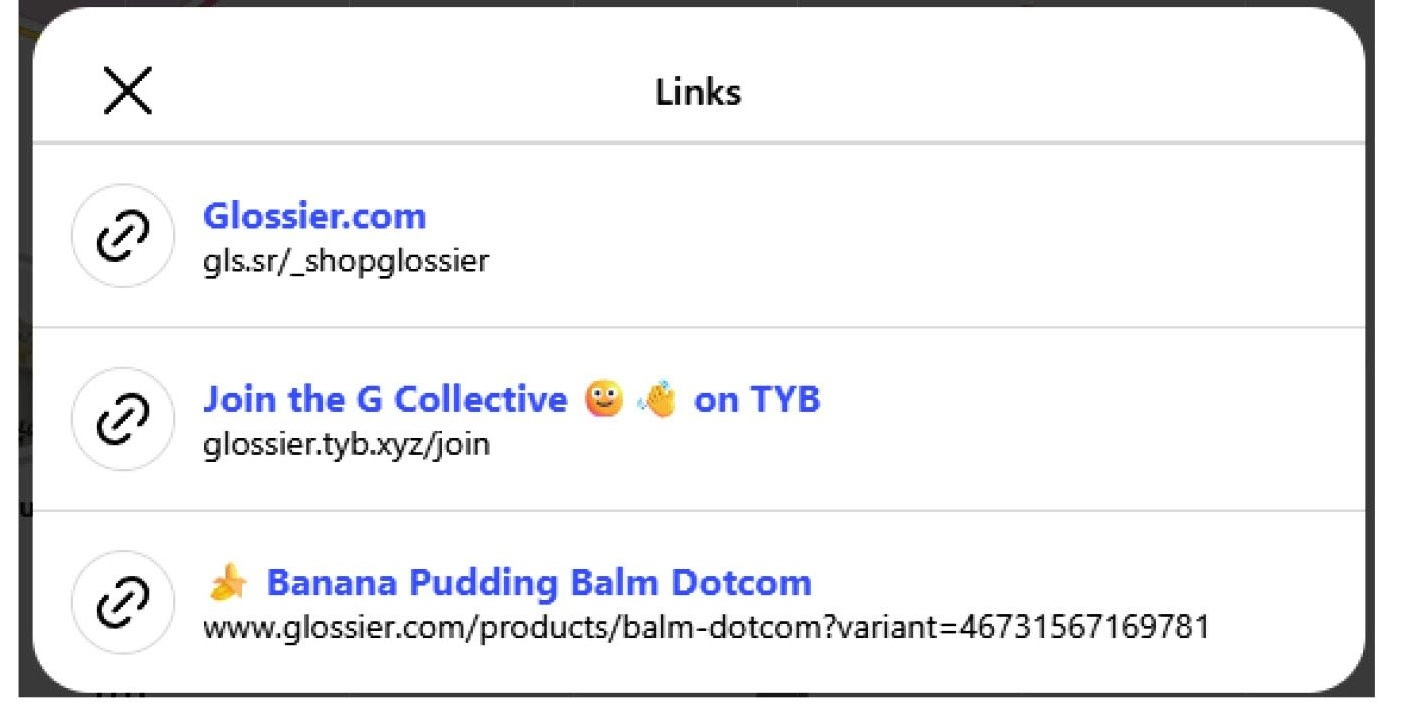
In this context, link-in-bio services have emerged as essential tools that facilitate commercial activities across social media platforms. Often referred to as “multilink” services, they allow users to connect multiple URLs or different types of content through a single link. Initially, these services functioned as simple link hubs that merely listed various destinations. Over time, however, they have evolved into more advanced platforms that support personalized page layouts, integrated e-commerce features, content visualization, and user analytics.
Within this growing landscape of social media-based commerce, a notable trend has emerged: influencer-led group buying. Group buying refers to a collective purchasing model in which an influencer promotes limited-time or limited-quantity products, encouraging followers to participate together to receive discounts or exclusive benefits (Kim et al., 2020). This phenomenon has transformed social media from a space for information exchange and community interaction into an active marketplace where consumers engage in collective, trust-based transactions.
In this evolving environment, link-in-bio services play a pivotal role. Influencers utilize these platforms to share product information, coordinate group-buying campaigns, and manage interactions with followers more effectively. By embedding multilinks in their profile bios, influencers provide followers with seamless access to multiple resources such as product pages, detailed descriptions, purchasing timelines, and customer service through a single interface (see Figure 3
This study empirically examines how the utilization of link-in-bio services influences influencer-led group-buying performance on social media. The analysis focuses on Kemi, a platform developed by Wired Company, a domestic influencer agency. Existing research on link-in-bio services has predominantly adopted a business-oriented perspective, emphasizing functional descriptions and case-based applications rather than academic investigation. Academic literature on this topic remains limited, and empirical studies exploring how link-in-bio services create economic value within influencer marketing are particularly scarce.
Building on this gap, the present research integrates real log data and daily sales records from Kemi to quantitatively assess the relationship between specific service features such as card clicks, product-detail views, video plays and sales performance. This approach illustrates that link-in-bio services are not merely technical connectors but strategic mechanisms that drive commercial success in influencer marketing. Moreover, by positioning link-in-bio services within academic discourse and validating their practical influence, this study broadens the analytical scope of influencer marketing research and offers new insights for optimizing platform functionalities and enhancing user experience.
Ⅱ. Literature Reviews
2.1 Global Link-in-Bio Services and the Korean Link-in-Bio Service “Kemi”
Link-in-bio services are platforms designed to connect multiple online destinations such as online stores, YouTube channels, blogs, event registration pages, and payment gateways through a single URL. These services emerged as a response to the restrictive structure of social networking service (SNS) profile biographies, which traditionally permitted only one external link. As of 2022, approximately 31 million Instagram users worldwide were utilizing link-in-bio services, with women comprising 64% of users. The largest user bases were concentrated in the United States (49%), Brazil (13%), the United Kingdom (7%), and Australia (4%), with influencers holding large followings particularly active in using link-in-bio tools for brand collaborations (Kiril, 2024).
Among global link-in-bio platforms, Linktree, launched in Australia in 2016, dominates the market with a 79% global share. It offers unlimited link connections, integration with media platforms such as Spotify and Sound Cloud, payment systems via Pay Pal and Square, user behavior analytics, and customizable design options including thumbnails and themes—enhancing both brand identity and business utility. Other international services such as Milkshake App and Beacons (United States) and Linkin.bio (Canada) provide comparable functionalities, featuring unlimited link connections, multimedia content integration, data analytics, and design customization (see Table 1
Table 1 Global and Korean Link-in-Bio Services and Features^1
| Link-in-bio Service | Country of Origin | Launch Date | Paid Plan Availability | Features |
|---|---|---|---|---|
| Linktree | Australia | 2016.04 | O (Subscription) | - Unlimited link integration - Integration with external platforms (e.g., Spotify, Sound Cloud) - Usage analytics (e.g., clicks, visitors) - Payment integration (e.g., Pay Pal, Square) - Customization options (e.g., thumbnails, themes) - English-only support |
| Inpock Link | South Korea | 2018.10 | O (Subscription) | - Unlimited link integration - Integrated business inquiries (e.g., DM, email) - Customization options (e.g., thumbnails, themes) - Schedule sharing and automated notifications - English and Korean support |
| Milkshake App | United States | 2018.11 | O (Subscription) | - Unlimited link integration - Multi-format content integration (e.g., text, images, videos, blogs, podcasts) - Usage analytics (e.g., clicks, visitors) - Customization options (e.g., thumbnails, themes) - English-only support |
| Linkin.bio | Canada | 2019.11 | O (Subscription) | - Unlimited link integration - Customization options (e.g., buttons, backgrounds) - Key link highlighting via banners - Email subscriber management - Brief link descriptions - English-only support |
| Beacons | United States | 2020.09 | O (Subscription) | - Unlimited link integration - Monetization features (e.g., sponsorships, affiliate marketing, digital product sales) - Customization options (e.g., thumbnails, themes) - Mobile marketing (e.g., email, SMS) - Creator collaboration features (community blocks) - English-only support |
| Litt.ly | South Korea | 2021.05 | O (Limited additional features) | - Unlimited link integration - Payment integration (e.g., product sales, sponsorship payments, international transactions) - Customization options (e.g., templates, fonts) - YouTube video embedding - Usage analytics (e.g., page visits, clicks) |
| Kemi | South Korea | 2022.05 | X | - Unlimited link integration - Multimedia content embedding (e.g., images, videos) - Customization options (e.g., background images, music) - Timeline visualization for group purchasing schedules - Usage analytics (e.g., clicks, conversion rates, page visits) |
| Revu Link | South Korea | 2024.05 | X | - Unlimited link integration - Media display (e.g., text, image, video) - Integration with multiple social media platforms - Customization options (e.g., templates) |
In Korea, comparable link-in-bio platforms have been developed, including Inpock Link (2018), Litt.ly (2021), and Revu Link (2024). These services provide functionalities similar to global counterparts such as unlimited link connections and customizable designs while offering additional features tailored to local user needs, such as schedule management and automated notifications. Among them, Kemi, launched by Wired Company in May 2022, has attracted significant attention for its distinctive competitive advantages. Within four months of launch, Kemi recorded over 600,000 visitors, reflecting rapid user adoption.
Kemi differentiates itself through its interactive design features, allowing users to integrate multimedia content such as images and videos, thereby enhancing engagement beyond traditional text-based link lists (see Figure 4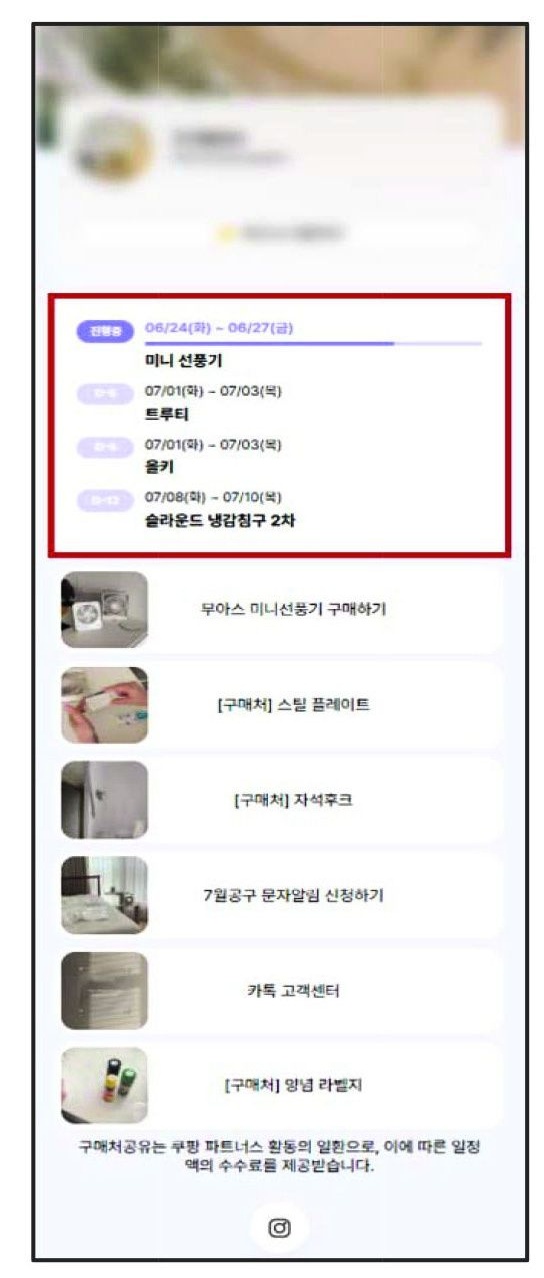
Consequently, Kemi has established itself not merely as a link aggregation platform but as an interactive platform that enhances brand identity and consumer experience. This study aims to empirically analyze the impact of link-in-bio provided through social media on consumer purchase decisions, using Kemi's differentiated functionalities as a focal case study.
2.2 Expansion of Influencers’ Commercial Roles and the Group-Buying Model
Social media has significantly transformed influencer marketing by expanding promotional and sales strategies. Initially, influencers emerged as “online celebrities” by creating engaging content, building credibility and fostering trust through sharing expertise and active interaction with their followers (Lou & Yuan, 2019). Over time, influencers leveraged their established influence to engage in commercial collaborations, promoting brands and products in exchange for financial compensation (Djafarova & Rushworth, 2017; Kim et al., 2020). However, the shift from authentic content creation to explicit commercial engagement has led to adverse follower reactions (Jeon & Kwon, 2021). Followers tend to question the authenticity of influencer posts when promotional intent is evident, often resulting in negative perceptions of both influencers and associated brands (Boerman et al., 2015; Evans et al., 2017; Kim & Kim, 2021; Van Reijmersdal et al., 2016; Wojdynski & Evans, 2016). Posts clearly marked as “paid ad” or “sponsored” are frequently viewed as persuasive marketing messages, undermining followers' trust and reducing their willingness to share content (Campbell et al., 2013). Regulatory actions, such as the guidelines set by the U.S. Federal Trade Commission (FTC), have further solidified these perceptions by explicitly requiring influencers to disclose sponsored content, reinforcing their image as commercial actors (Hwang & Jeong, 2016). Nevertheless, recent research suggests that commercial content does not universally generate negative outcomes; rather, its effectiveness significantly depends on how influencers strategically manage their content (Kim et al., 2020; Lee & Kim, 2020).
Influencer marketing has further evolved from product endorsements toward direct sales models such as group-buying. Group-buying involves selling limited quantities of products at special prices over short promotional periods (Kim et al., 2020). Typically, influencers intensively promote these products on social media approximately one week before the sales period begins, followed by actual sales events lasting two to three days. Followers usually make purchases through external payment platforms, accessed via links provided in influencers’ social media profile bios. This practice originated due to the initial lack of integrated e-commerce functions within social media platforms and the technical challenges involved in linking online shopping systems. Consequently, all group-buying communications are primarily conducted through social media posts. Prior research has explored the impact of influencer activities on follower engagement, purchasing intentions, and actual sales outcomes (Kim et al., 2020; Lee & Kim, 2020; Leung et al., 2022). According to Kim et al. (2020), influencer content strategies should vary based on audience size; larger influencers tend to achieve greater sales through frequent promotional content, while smaller influencers benefit more from creating empathetic, engaging interactions. Leung et al. (2022) identified influencer posting frequency as a critical factor, revealing an inverted U-shaped relationship between influencer activity and marketing effectiveness. Specifically, too little activity can hinder credibility, whereas excessive posting can lead to information overload and negative audience reactions. Additionally, Kim et al. (2024a) found that one-way communication negatively impacts sales, while interactive communication through active responses to follower comments positively influences sales, following a similar inverted U-shaped pattern.
Consequently, previous research has demonstrated that various influencer activities can positively affect group-buying sales performance. However, limited scholarly attention has been devoted to understanding the specific role and effectiveness of link-in-bio services embedded in influencers’ social media bios. Therefore, this study investigates how link-in-bio services functioning as critical communication channels during group-buying promotions affect actual sales outcomes.
2.3 Role of Link-in-Bio Services in Influencer Marketing
The term “Link-in-bio” refers to a clickable URL placed within a social media profile's biography section. This practice is especially prevalent on platforms such as YouTube and Instagram, where inserting clickable external links directly within individual posts is restricted. Due to these constraints, users frequently include external links in their profile bios and direct followers to these links via individual posts. Since its introduction in 2016, the link-in-bio approach has become an essential component of social media marketing strategies. However, empirical research examining the marketing effectiveness of link-in-bio services remains limited.
Influencers primarily communicate with their followers through social media posts during group-buying campaigns. According to Kim et al. (2020), influencers employ distinct content strategies based on their level of influence, uploading both commercial and non-commercial posts during intensive promotional periods prior to sales events. Commercial posts explicitly indicate paid partnerships or sponsorships through phrases like “#sponsored” or “#ad,” and prominently feature promotional content such as product-related images, videos, and comments. In contrast, non-commercial posts involve sharing personal, everyday life experiences without any commercial intent (De Jans et al., 2020; Kim et al., 2020). When commercial and non-commercial content coexist, followers may struggle with information overload, becoming overwhelmed by the difficulty of distinguishing essential purchase-related information, a phenomenon likely exacerbated when multiple products are promoted simultaneously.
Information overload occurs when the volume of information exceeds an individual's cognitive processing capabilities (Zhang et al., 2020). According to Lang’s (2000) limited capacity model, humans possess finite cognitive resources for information processing; exceeding these resources increases cognitive strain, stress, and impaired decision-making capabilities. Specifically, followers are likely to experience cognitive overload when influencers concurrently upload multiple commercial and non-commercial content within a short timeframe, complicating efficient discernment of relevant information (Pang & Ruan, 2023). Such cognitive overload can lead to social media fatigue, defined as psychological exhaustion and disinterest resulting from continuous exposure to content and information processing demands (Cherubini et al., 2010; Bright et al., 2015; Zhang et al., 2016; Lee et al., 2016). Accumulated social media fatigue may prompt users to reduce platform usage or even discontinue use entirely, decreasing follower engagement and negatively impacting purchase intentions (Lin et al., 2021; Kim et al., 2024b).
In digital environments characterized by information overload, individuals commonly rely on cues for efficient information processing (Sundar, 2008). Humans are cognitive misers, aiming for quick and efficient decision-making with minimal cognitive effort, heavily relying on various cues to rapidly assess content credibility (Lynch et al., 1988). While content elements (e.g., headlines) serve as informational cues, technological features also provide critical signals affecting users' perception and information-processing behaviors (Sundar, 2008). For example, algorithm-based navigation features in platforms like Google News provide users clear signals about content relevance, recency, and credibility, facilitating efficient information search and rapid quality assessments (Sundar et al., 2007). Thus, services with robust content curation and information discovery capabilities enable users to efficiently select and process necessary information, quickly evaluate credibility, and effectively integrate new information with existing knowledge (Knoll et al., 2020; Matthes et al., 2020; Naderer et al., 2020; Nanz et al., 2022; Tandoc et al., 2021; Thorson & Wells, 2016; Van Overschelde & Healy, 2001).
In this context, our study aims to examine the role of link-in-bio services as informational cues designed to mitigate information overload and social media fatigue within influencer marketing. Link-in-bio services enable intuitive navigation among various content links, providing visual cues and detailed product information to help followers quickly and efficiently identify relevant content. This study explores how these detailed features of link-in-bio services practically influence group-buying sales performance, seeking to confirm the value of these services as effective tools for reducing cognitive load among followers and enhancing overall sales outcomes in influencer marketing.
Ⅲ. Data and Method
3.1 Data
In this study, we utilized data from Wired Company's link-in-bio service, “Kemi.” The dataset consists of daily observations collected over approximately one year, from June 1, 2023, to April 30, 2024, comprising a total of 335 observations. The data can be broadly categorized into Kemi log data and sales data.
First, Kemi log data encompasses various user interactions within the link-in-bio page, including click frequencies and page views. Specifically, the variables include the total number of card (link) clicks on the link-in-bio page on day t (click_cardt), the total frequency of product detail page views (product_detailt), the total frequency of product-related video content plays (video_playt), a binary measure indicating whether influencers utilized interactive features (such as inserting or changing images or background music) on the link-in-bio page (set_userpropertiest), the frequency of membership registration pop-up exposure (signup_popupt), and the total number of side-menu openings (sidemenut).
Second, the sales data represents actual sales generated on the shopping platform linked with the Kemi service, reflecting total daily transactions. Given the skewed distribution of sales data, we applied a natural logarithmic transformation (ln_salest) to normalize the values.
Ultimately, this study aims to analyze how user behaviors such as clicks and page views and influencers' direct use of interactive features within the link-in-bio service affect group-buying sales on the same day (t). While most of the observed data primarily capture user interactions, including clicks and page views, the interactive feature variable (set_userpropertiest) reflects the influencer's direct actions in customizing or modifying the page. Accordingly, the analysis examines the relationship between user and influencer activities within the link-in-bio service and their combined impact on group-buying sales. The descriptive statistics and detailed definitions of all variables are provided in Tables 2
Table 2 Description of Variables
| Variables | Descriptions |
|---|---|
| ln_salest | Natural log-transformed total sales from group-buying transactions generated via the Kemi service on day t |
| click_cardt | Total number of follower visits to the link-in-bio page on day t |
| product_detailt | Total number of times followers opened product detail pages within the link-in-bio page on day t |
| video_playt | Total number of times followers played product-related video content provided within the link-in-bio page on day t |
| set_userpropertiest | Total number of times influencers updated interactive features (such as adding or changing images and background music) on the link-in-bio page on day t |
| signup_popupt | Total number of times the membership signup popup was displayed on the link-in-bio page on day t |
| sidemenut | Total number of times the side menu was opened on the link-in-bio page on day t |
Table 3 Descriptive Statistics
| Variables | Obs. | Mean | Standard Deviation | Min. | Max. |
|---|---|---|---|---|---|
| ln_salest | 335 | 17.0631 | 0.6158 | 14.4834 | 18.6586 |
| click_cardt | 335 | 26674.12 | 8967.379 | 9703 | 56768 |
| product_detailt | 335 | 4731.137 | 2008.132 | 1293 | 13465 |
| video_playt | 335 | 1957.316 | 1183.045 | 307 | 14593 |
| set_userpropertiest | 335 | 1055.904 | 373.1929 | 225 | 2656 |
| signup_popupt | 335 | 604.603 | 318.2499 | 0 | 2045 |
| sidemenut | 335 | 545.7015 | 281.0883 | 0 | 2711 |
3.2 Method
In this study, we conducted an Ordinary Least Squares (OLS) regression analysis to investigate how specific functionalities of the Kemi link-in-bio service impact actual sales performance. OLS regression is a statistical method that identifies the linear relationship between one or more independent variables and a dependent variable by minimizing the sum of squared residuals (Lim, 2020). The data employed in this research are cross-sectional, representing aggregated daily observations rather than panel data differentiated by specific influencers or user IDs. Hence, instead of utilizing panel data methods, we analyzed each daily observation independently to examine linear relationships between independent and dependent variables. The regression equation established in this study is presented in Equation (1).
The dependent variable (ln_salest) represents the natural logarithm-transformed daily total sales amount generated through the Kemi service, denoting sales performance on day t. Primary independent variables include the total frequency of user visits to the link-in-bio page (click_cardt), the total frequency of product detail page views (product_detailt), and the total frequency of product-related video content plays within the link-in-bio page (video_playt), analyzing their immediate impacts on same-day sales performance. Control variables (Xt) incorporated in the analysis include the total frequency of influencer interactions with the interactive features of the link-in-bio page such as inserting or changing images and background music (set_userpropertiest), the total frequency of membership registration pop-up exposure (signup_popupt), and the total frequency of side-menu openings (sidemenut), thereby improving analytical precision. Additionally, εt represents the error term that accounts for unexplained variations within the model.
Furthermore, we assessed potential multicollinearity issues by analyzing the correlation matrix among variables and computing the variance inflation factor (VIF). Typically, multicollinearity is indicated if correlation coefficients exceed 0.8 (r > 0.8) or if the VIF exceeds 10 (Shrestha, 2020). Our analysis revealed that all correlation coefficients among explanatory variables remained below 0.8, and calculated VIF values for all variables remained under 10, indicating no significant multicollinearity problems (see Tables 4
Table 4 Correlation Matrix
| (1) | (2) | (3) | (4) | (5) | (6) | (7) | |
|---|---|---|---|---|---|---|---|
| (1) | 1.0000 | ||||||
| (2) | 0.3214* | 1.0000 | |||||
| (3) | 0.7557* | 0.2915* | 1.0000 | ||||
| (4) | 0.0725 | 0.4292* | 0.1020 | 1.0000 | |||
| (5) | 0.7635* | 0.5130* | 0.7565* | 0.2840* | 1.0000 | ||
| (6) | 0.5234* | 0.0582 | 0.4452* | 0.0113 | 0.4634* | 1.0000 | |
| (7) | 0.0512 | 0.2453* | 0.0691 | 0.0689 | 0.0805 | 0.5283* | 1.0000 |
* p<0.05
(1) ln_salest (2) click_cardt (3) product_detailt (4) video_playt (5) set_userpropertiest (6) signup_popupt (7) sidemenut
Table 5 VIF Results
| VIF | |
|---|---|
| click_cardt | 1.99 |
| product_detailt | 2.49 |
| video_playt | 1.26 |
| set_userpropertiest | 3.74 |
| signup_popupt | 2.37 |
| sidemenut | 1.84 |
Ⅳ. Results
The analysis revealed that the frequency of clicks on card links (click_cardt) within the link-in-bio page positively and significantly influenced group-buying sales performance (see Table 6
Table 6 Main Results
| DV (ln_salest) | |
|---|---|
| click_cardt | 7.52e-06** (3.48e-06) |
| product_detailt | 0.0001*** (0.0000) |
| video_playt | -0.0001** (0.0000) |
| set_userpropertiest | 0.0006*** (0.0001) |
| signup_popupt | 0.0006*** (0.0001) |
| sidemenut | -0.0004** (0.0002) |
| Obs. | 335 |
| Adjusted R^2 | 0.7042 |
In contrast, the frequency of video content plays (video_playt) had a negative impact on sales. This finding implies that repeatedly presenting similar video content on the link-in-bio page might induce consumer fatigue and reduce user engagement. Users are likely to experience information redundancy due to prior exposure to similar content (e.g., photos and videos) on influencer social media posts.
Overall, these results highlight that user activities such as card clicks, and product detail views are effective strategies for boosting group-buying sales through link-in-bio services. However, excessive repetition of similar content can adversely affect consumer interest. Therefore, marketers should strategically avoid redundant content exposure to maintain consumer engagement and optimize sales performance. These findings offer valuable practical insights into designing future marketing strategies involving link-in-bio services in influencer-driven commerce.
Ⅴ. Robustness Check
In order to verify the robustness of the main results, we conducted an additional analysis focusing on the period after user engagement with the service stabilized. During the early stages of a newly launched service, user traffic typically fluctuates considerably, and consistent usage patterns are not yet formed. Recognizing that such early-stage volatility may introduce potential bias, we repeated our analysis using data collected exclusively from a period of stable user engagement.
We first identified the stabilization point by examining trends in daily card-click frequency (click_cardt), which serves as a primary indicator of service usage. Because the proprietary business data of the Kemi link-in-bio service required confidentiality, daily usage patterns were transformed using natural logarithms before being visualized (see Figure 6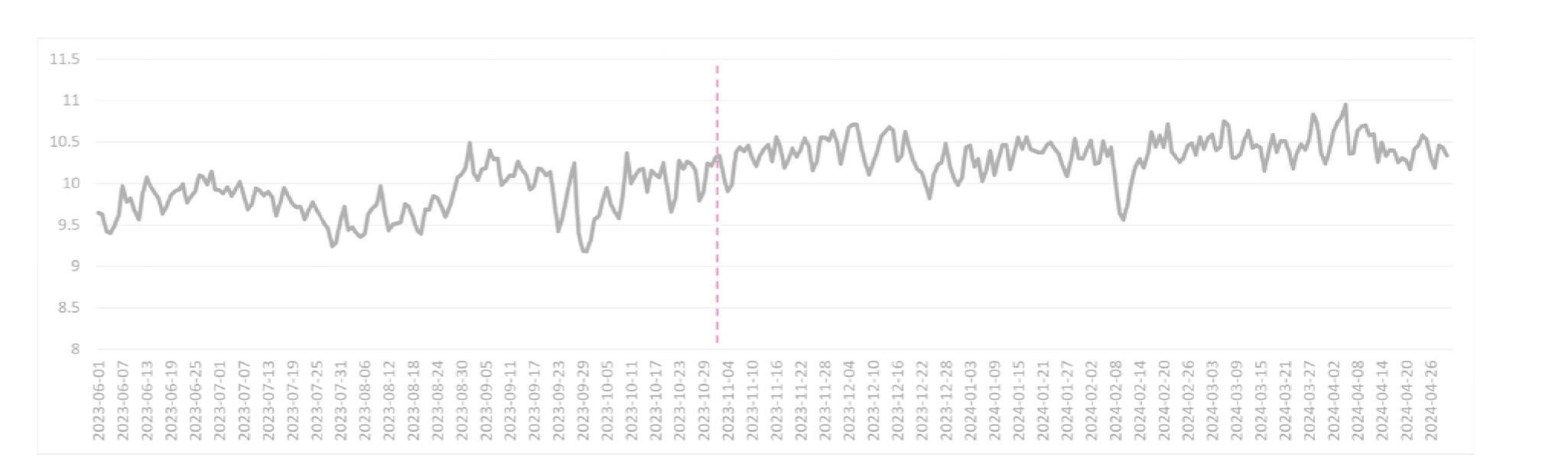
Consequently, we conducted the same analytical procedure used in the main analysis, this time using 152 observations collected between November 1, 2023, and April 30, 2024. By comparing these results with the original full-sample analysis, we were able to verify the consistency and robustness of our findings, confirming that early-stage variability did not distort our conclusions.
The robustness check confirmed that the primary variables maintained effects consistent with those observed in the main analysis. Specifically, the frequency of card clicks (click_cardt) continued to show a statistically significant and positive association with group-buying sales. Similarly, visits to product detail pages (product_detailt) also exhibited a positive and significant effect on sales. In contrast, the frequency of video content plays (video_playt) showed a negative relationship with sales performance.
These results indicate that the relationships identified in the primary analysis are not confined to specific time periods or samples but remain stable even after the initial fluctuations in service usage had subsided.
In particular, active user behaviors such as clicking on product cards and viewing detailed product information continue to play a crucial role in enhancing group-buying sales. Conversely, repetitive exposure to video content consistently leads to user fatigue, thereby negatively influencing sales outcomes.
Overall, the robustness check provides compelling evidence that the key interpretations of this study remain valid and reliable, even when the analysis is restricted to the stabilized period of service use.
Ⅵ. Conclusion
This study conducted an empirical examination of how distinct functionalities of the link-in-bio service, “Kemi”, a core platform supporting influencer-driven group buying, affect actual sales performance. The analysis revealed that both card clicks (click_cardt) and product-detail page views (product_detailt) have statistically significant and positive effects on group-buying sales, whereas video content plays (video_playt) show a negative association. These findings demonstrate that active user behaviors, such as clicking on product cards or accessing detailed product descriptions, are instrumental in driving purchase conversions, while repetitive exposure to similar video content leads to informational redundancy and consumer fatigue, ultimately reducing sales performance. A robustness analysis based on stabilized usage data further confirmed the consistency of these relationships across different timeframes and usage contexts.
In terms of theoretical implications, this study contributes to influencer marketing research by positioning link-in-bio services as an independent and empirically verifiable domain within social media commerce. It advances theoretical understanding by clarifying the behavioral mechanisms through which specific link-in-bio features facilitate or hinder sales outcomes. In doing so, the study expands existing discussions of social media engagement beyond content-level analysis and underscores the importance of platform-level interaction design. By linking user engagement patterns within digital interfaces to measurable commercial performance, this research provides a conceptual framework that explains how micro-level digital behaviors translate into macro-level economic outcomes.
Regarding managerial implications, the findings offer actionable insights for influencers, marketers, and platform developers seeking to optimize the commercial utility of link-in-bio services. Structuring link-in-bio pages to provide intuitive and efficient access to essential product information can enhance user engagement and conversion rates, whereas minimizing redundant or repetitive video content can help prevent user fatigue and sustain attention. These insights highlight the strategic role of link-in-bio services as functional gateways connecting influencer-generated content and consumer purchasing behavior, emphasizing their growing importance within influencer-driven commerce.
Despite these contributions, this study has certain limitations. As the analysis utilized observational data derived from a single platform, potential endogeneity concerns, including the possibility that users with higher purchase intent engaged more frequently, could not be entirely ruled out. Although advanced causal inference methods, such as instrumental variable (IV) or two-stage least squares (2SLS) estimation, could mitigate this issue, such approaches were not feasible given the constraints of the available dataset. Future research should consider expanding the dataset to include more detailed variables, such as product categories, content formats, and user traffic sources, to explore heterogeneous effects and strengthen causal interpretations.
Therefore, this study contributes to both academic theory and managerial practice by empirically validating the strategic and economic significance of link-in-bio services within influencer-led commerce while identifying promising directions for methodological and conceptual refinement. Further exploration of cross-platform variations, product-specific factors, and consumer behavioral dynamics will deepen understanding of how digital engagement mechanisms shape commercial outcomes in evolving social media environments.
Acknowledgments
This work was supported by the Ministry of Education of the Republic of Korea and the National Research Foundation of Korea (NRF-2022S1A5A2A01047368)
This research was supported by the Sungkonghoe University Research Grant of 2024
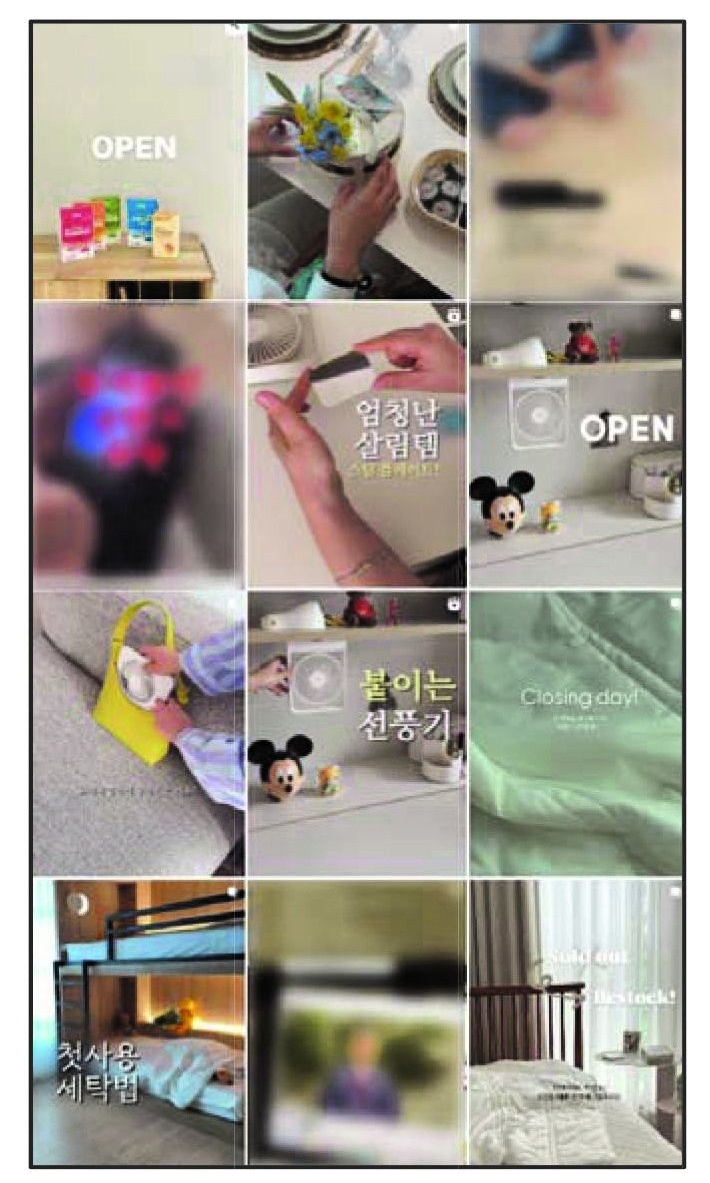
Table 7 Robustness Check Results
| DV (ln_salest) | |
|---|---|
| click_cardt | 0.0000** (4.53e-06) |
| product_detailt | 0.0001*** (0.0000) |
| video_playt | -0.0000** (0.0000) |
| set_userpropertiest | 0.0004*** (0.0001) |
| signup_popupt | 0.0005*** (0.0001) |
| sidemenut | -0.0005*** (0.0001) |
| Obs. | 152 |
| Adjusted R^2 | 0.7223 |